educational tips
Basketball Vocabulary for Kids: 25 Words to Know Before the Game
LitZone Team · Oct 18, 2026
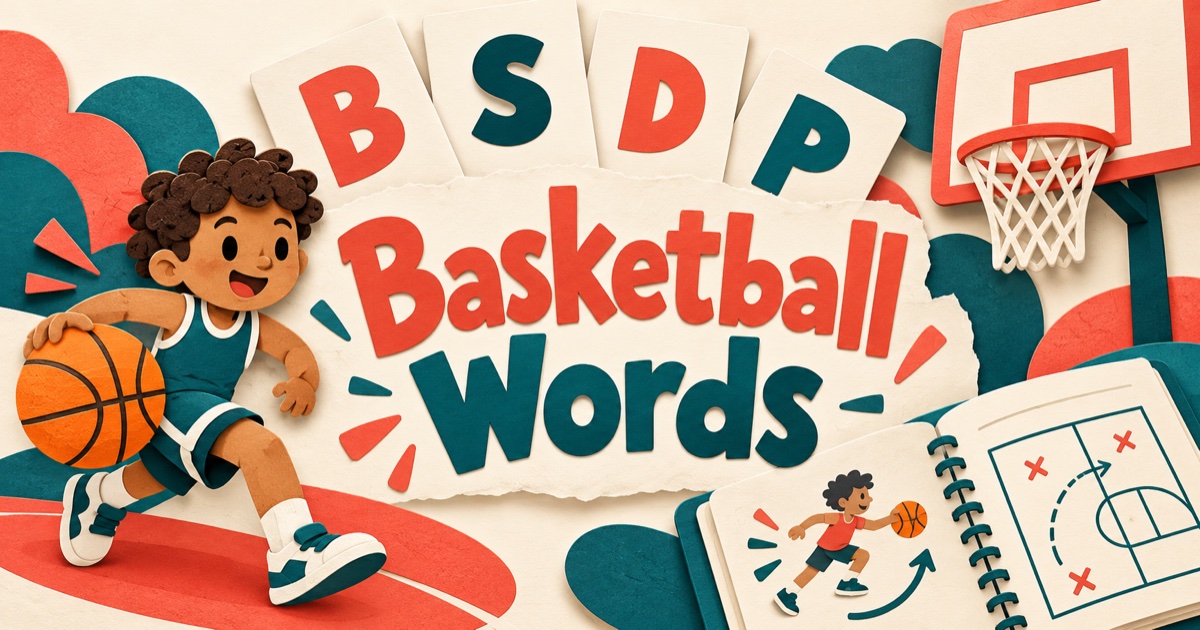
Basketball becomes easier to follow when the words around the game start to make sense. A child does not need to memorize a long dictionary before watching. A few words, a clear example, and a chance to use each word can be enough for one conversation.
This guide groups 25 basketball words by what a child might notice: people, movement, scoring, and the record of a game. The examples are invented learning situations. They are not reports about real players or teams.
Download the basketball vocabulary activity and answer key. The printable uses a short fictional practice scene, six selected words, and questions that ask children to explain meanings in context. It is designed as a starting activity for grades 3-5, with a parent or teacher choosing the amount of reading support.
Words for people and teamwork
1. Teammate: A person playing on the same team. If Ari sends the ball to Jo and they play for the same side, Jo is Ari's teammate.
2. Opponent: A player or team on the other side. An opponent is part of the game, not an enemy outside it. Families can use the word while still speaking respectfully about every participant.
3. Coach: A person who guides practice and helps a team prepare and make decisions. In a fictional practice, the coach might explain a passing drill before the players begin.
4. Referee: An official who applies the game's rules. A referee's signal helps players and spectators understand a decision. The exact rules for a particular youth competition come from that competition.
5. Defender: A player working to prevent the other team from scoring. A defender might move to stay between an opponent and the basket. The word describes a role during play, not a permanent label for one child.
Choose two of these words and ask the child to place them in a sentence about an imaginary team. "The coach asked each teammate to listen" is a simple example that connects the vocabulary to an action.
Words for moving the ball
6. Pass: Send the ball to a teammate. A pass moves the ball from one player to another.
7. Dribble: Bounce the ball while controlling it. In a practice scene, a child may dribble toward a marked spot before passing.
8. Catch: Secure the ball after it comes toward you. A catch can follow a pass, but it can also happen in other situations.
9. Pivot: Turn while keeping one foot in place as the pivot foot. A slow demonstration without a ball can help show what the word describes. Check the coach's guidance before using a movement demonstration in a group.
10. Inbound pass: A pass that brings the ball into play from outside the court boundary. In our fictional reading story, an inbound pass starts the possession after a timeout.
11. Possession: The time when a team controls the ball. A team can make several passes during one possession, so one pass does not automatically mean a new possession.
Use these words to describe a short sequence: catch, dribble, pass, catch. Then ask which action belongs to which player. This is a vocabulary exercise, so a child can tell the sequence with toy figures or a drawing instead of acting it out.
Words for shots and scoring
12. Shot: An attempt to send the ball through the basket. A shot can be made or missed.
13. Basket: The hoop and net that players aim for; people also use the word for a successful shot. Context tells the reader which meaning is intended.
14. Rim: The circular ring of the basket. A shot can touch the rim and still miss, so touching it is not the same as scoring.
15. Backboard: The board behind the rim. It is a separate part of the equipment from the rim and net.
16. Free throw: A shot taken from the free-throw line under the game's rules. In the scoring examples used in this learning guide, a made free throw adds one point.
17. Two-pointer: A made shot worth two points. For a numbers example, three two-pointers contribute six points.
18. Three-pointer: A made shot worth three points. Two three-pointers also contribute six points, even though the number of made shots is different.
The last two examples invite a useful comparison. Three groups of two and two groups of three have the same total. The child can explain that relationship with counters, a drawing, or a sentence.
Words for statistics and the game record
19. Rebound: Gaining the ball after a missed shot. A rebound follows a miss, so the order of events matters when explaining the word.
20. Assist: A pass credited with helping a teammate score. A pass followed by a missed shot does not become an assist simply because the pass was accurate. Official statistical credit is a separate matter from a family's observation activity.
21. Turnover: A loss of possession to the other team. When reading a statistical line, keep turnovers separate from points scored.
22. Score: The number of points recorded for a player or team. Ask what the score refers to before comparing two numbers.
23. Period: One part of the game's playing time. Different competitions divide time in different ways, so the word is more general than "quarter."
24. Timeout: A permitted pause in play. In a story, a timeout can provide a moment for characters to listen, plan, and notice how they feel.
25. Box score: A table that summarizes recorded game statistics. Our basketball box-score guide explains how to read one small fictional table without treating every column as points.
Practice with a short scene
Read this fictional scene aloud: Ari dribbles, then passes to Jo. Jo shoots and misses. Sam catches the rebound. On the next possession, Sam passes to Ari, who makes a basket.
Ask the child to identify the dribble, pass, shot, rebound, and possession in order. Then ask why Ari's first pass is not an assist in this scene. The relevant clue is that Jo misses the shot. The answer should connect the definition to the event rather than rely on guessing.
Change one detail and discuss what changes in the explanation. If Jo makes the shot, the first sequence now ends with a made basket. Keep the activity focused on understanding the vocabulary; a short practice scene cannot reproduce every detail used in official statistical decisions.
Use a few words again tomorrow
Choose three words for a drawing or a two-sentence recap. Ask the child to underline the words and explain what each one contributes. A sentence that says "The rebound came after the missed shot" shows more understanding than a copied definition alone.
For a longer story using several of these words, read The Extra Pass. For a writing activity, use the basketball journal prompts. Returning to a small set of words in meaningful sentences keeps the vocabulary connected to something the child can picture and explain.
Built for ages 8–13
Playing fantasy football with your kid?
Give them a team of their own, with kid-friendly football, reading, and math in one place.
Create their first fantasy team free

Ad-free. No chat. Built for kids.